Introduction
Hydraulic piston pumps are the pressure-generating core of industrial hydraulic systems—powering everything from excavators and forklifts to automated manufacturing lines and agricultural equipment. When a piston pump fails, entire operations grind to a halt. A single downed excavator can cost $500–$1,500 per day in lost productivity, while a stalled production line can run into tens of thousands of dollars per day.
Pump failures rarely happen without warning. Unusual noises, pressure drops, overheating, and external leaks follow predictable patterns with identifiable causes. Recognizing these early warning signs and understanding their root causes is the difference between a quick repair and a catastrophic failure.
This guide covers the most common hydraulic piston pump problems, a step-by-step troubleshooting and repair process, when to fix versus replace, and how to prevent repeat failures.
Key Takeaways
- The four most common problems are abnormal noise, low pressure/flow, overheating, and external oil leakage
- Most failures trace back to internal wear, fluid contamination, cavitation, or neglected maintenance
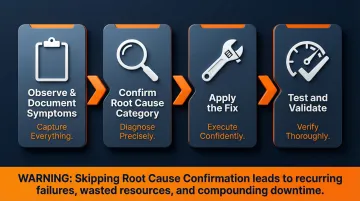
- Troubleshooting follows a logical sequence: observe symptoms → confirm root cause → apply a fix → test
- Many pumps can be repaired if caught early — replacement makes sense when wear is extensive or repair costs exceed the pump's value
What Is a Hydraulic Piston Pump?
A hydraulic piston pump is a positive-displacement pump that converts mechanical power into hydraulic power using reciprocating pistons within a rotating cylinder block. As the cylinder block rotates, pistons move in and out of their bores — drawing fluid from the low-pressure suction side and forcing it out the high-pressure discharge side.
Two primary configurations are used in practice:
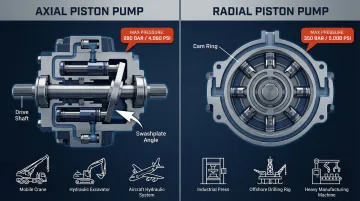
- Axial piston pumps: Pistons move parallel to the drive shaft, driven by an angled swashplate or bent-axis design
- Radial piston pumps: Pistons mount radially around a rotor and move outward from the center, driven by a cam ring
Because piston pumps operate under high pressure—up to 280 bar (4,060 psi) for axial designs and 350 bar (5,000 psi) for radial configurations—with extremely tight internal tolerances, even minor component wear degrades flow efficiency, raises operating temperature, and accelerates internal leakage. Catching these symptoms early is what separates a minor service call from a full pump replacement.
Common Hydraulic Piston Pump Problems and Their Root Causes
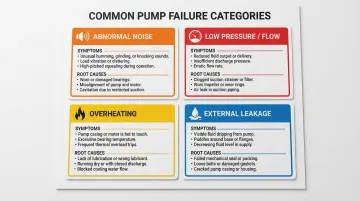
Most piston pump failures fall into four predictable categories, each with distinct symptoms and identifiable causes.
Problem 1: Abnormal Noise and Vibration
Two main noise types to listen for:
- High-pitched whining or "marbles-in-a-can" sound — cavitation or aeration
- Cavitation: Pump starved of fluid; pressure drops below vapor pressure, causing bubbles to violently implode — produces sharp, metallic knocking
- Aeration: Outside air ingested on the suction side — produces softer, continuous rasping or rattling
Common suction-side causes:
Blocked suction line or low fluid level
Incorrect oil viscosity
Loose suction fittings or porous suction hoses
Worn shaft seals
Grinding or thumping noise — mechanical wear
- Worn bearings, damaged piston shoes, or loose connecting components
- Constant (not intermittent); worsens progressively as wear accelerates
Key diagnostic clue: Aeration noise is often intermittent and worsens under load, while mechanical wear noise is constant. Ignoring either accelerates internal damage rapidly.
Problem 2: Low Output Pressure or Reduced Flow
Insufficient pressure is almost always a symptom of internal leakage—oil bypassing the pressure stroke rather than building system pressure.
Common causes:
- Worn or scored valve plate (allows high-pressure fluid to bypass back to inlet)
- Increased piston-to-cylinder clearance from wear
- Stuck or damaged swashplate (variable displacement pumps)
- Misadjusted pressure compensator
External signs:
- Sluggish actuator movement
- Inability to reach rated system pressure
- Pump running continuously without unloading
Diagnostic check: Monitor case drain flow. Excessive flow (typically >10% of rated pump flow) indicates severe internal leakage and worn components.
Problem 3: Overheating
While hydraulic systems generate heat naturally, excessive temperature damages seals, thins oil, and accelerates wear. OEM temperature limits:
- Parker P1/PD Series: 110°C (230°F) maximum at case drain
- Bosch Rexroth A10VSO: 115°C (239°F) maximum leakage temperature
Common causes:
- High internal leakage generating friction heat
- Clogged or failed heat exchanger
- Low fluid level reducing heat dissipation
- Prolonged bypass operation (pump running at full displacement against relief valve)
Quick diagnostic check: If the pump case drain line is significantly hotter than the pump outlet line, internal leakage within the rotating group is likely the cause.
Problem 4: External Oil Leakage
Common leak points:
- Shaft seal failure — Often caused by excessive case drain pressure from a restricted drain line (OEMs limit case pressure to 2 bar / 30 psi maximum), or a worn shaft
- O-ring and gasket failure — Between pump housing sections
- Damaged or incorrectly installed seals
External leakage signals a seal system breakdown. Left unaddressed, it worsens over time and opens a path for contaminants to enter the pump.
How to Troubleshoot and Fix a Hydraulic Piston Pump: Step-by-Step
Skipping root cause confirmation before repair leads to unnecessary part replacement, repeat failures, and extended downtime. Follow these four steps to get the diagnosis right before touching anything.
Step 1: Observe and Document Symptoms
Before touching anything, systematically observe all available indicators:
- Noise type and location — whining typically signals cavitation; grinding or thumping points to mechanical wear
- Leak source — distinguish between shaft seal failure, housing gasket failure, and port connection leaks
- Pressure gauge readings — note actual pressure against rated specifications and flag any deviation
- Fluid level and condition — milky color indicates water ingress; dark or burnt fluid signals overheating; foam and metal particles each point to specific failure modes
Document when and how the fault occurs:
- At startup only?
- Under load?
- Continuously?
- Only at operating temperature?
The pattern of when the fault occurs points directly to the root cause category in Step 2.
Step 2: Confirm the Root Cause Category
Determine whether the fault is:
- Mechanical — scored valve plate, worn piston shoes, damaged bearings
- Fluid-related — contamination, incorrect viscosity grade, or insufficient fluid level
- Control/settings — compensator misconfiguration or relief valve set at the wrong differential
- Operational/environmental — cavitation from suction restrictions, chronic overloading, or inadequate cooling capacity
Rule out external system factors first:
- Verify suction line is fully open and unobstructed
- Confirm fluid level is adequate
- Check that the relief valve setting is correctly above the compensator setting (typically 200–290 psi differential for load-sense pumps, not the generic 100–150 psi rule)
Step 3: Apply the Fix Based on the Identified Root Cause
Applying the wrong fix (e.g., adjusting the compensator when the real issue is a worn valve plate) wastes time and can cause further damage.
If the Issue Is Mechanical (Worn Components)
For noise and pressure loss caused by internal wear:
- Clean the exterior of the pump before disassembly to prevent contamination
- Inspect the valve plate and cylinder block contact surface for scoring or washout
- Check piston shoes and slipper pads for wear
- Replace seals, bearings, and piston shoes as a set rather than individually
- Verify the swashplate moves freely through its full range of motion
If the Issue Is Fluid or Contamination-Related
- Drain and replace hydraulic fluid if contaminated
- Replace all filters
- Flush suction and return lines
- Identify and seal the contamination entry point before refilling with the correct fluid type and viscosity grade per manufacturer specification
If the Issue Is a Control or Settings Problem
For low or erratic pressure on variable-displacement pumps:
- Inspect the displacement control spool for sticking or contamination
- Verify compensator spring and orifices are clean and intact
- Confirm the compensator cut-off pressure is set correctly relative to the relief valve
- Avoid altering compensator settings without first checking that all orifices are clear and the spool moves freely
Critical: If the pump compensator is set higher than the main system relief valve, the pump will never reach its cut-off pressure to de-stroke. It will run at maximum displacement and continuously dump full flow over the relief valve — generating extreme heat and accelerating component failure throughout the system.
If the Issue Is Operational or Environmental (Cavitation / Overheating)
To resolve cavitation:
- Ensure the suction line is free of kinks, blockages, and air ingress
- Check that all suction-side valves are fully open
- Verify hydraulic fluid is at the correct level and viscosity for the operating temperature
- Maintain minimum inlet absolute pressure: 0.8 bar (11.6 psi) for Parker P1/PD and Bosch Rexroth A10VSO pumps
- Reduce suction line length or increase diameter if NPSH requirements are not being met
To resolve overheating:
- Inspect and clean heat exchangers or cooling fans
- Check that the case drain line is unrestricted and case pressure does not exceed 2 bar (30 psi)
- Reduce system back pressure where possible
- Address the root cause of continuous bypassing rather than just cooling the fluid
Step 4: Test and Validate the Repair
After any repair:
- Run the pump under no-load conditions first
- Progressively increase to normal and peak operating pressure
- Monitor output pressure stability, noise level, and fluid temperature over a defined test period
- Confirm case drain flow is within acceptable limits (typically <5–10% of rated flow)
- Recheck all reconnected fittings and seals for leakage
- Document the repair for maintenance records to establish a baseline for future comparisons
Fix vs. Replace: When to Repair and When to Call a Pro
The repair vs. replace decision hinges on three factors: the extent of internal wear, the cost of parts relative to pump replacement cost, and the criticality of the application.
Repair the Pump When:
- The fault is isolated to a specific component (seal, bearing, valve plate) with no damage to the housing or cylinder block
- The pump is relatively new and within its expected service life
- Quality replacement parts are available for the specific manufacturer and model
Replace or Pursue Professional Rebuild When:
- Multiple internal components are worn simultaneously, indicating end-of-life wear across the rotating group
- The cylinder block, housing, or swashplate shows irreparable scoring or cracking
- Parts and labor costs for in-house repair approach or exceed the cost of a replacement unit
Parts availability is a practical barrier for older or less common pump brands. Hydrostatic Pump Repair's manufacturer database covers Sundstrand, Danfoss, Eaton, Kawasaki, Komatsu, Rexroth, Uchida, Cessna, Vickers, Denison, Parker, and others — which means a professional rebuild is often feasible even when sourcing parts independently isn't.
Common Mistakes to Avoid and Preventive Maintenance Tips
Three Repair Mistakes That Cause Repeat Failures
Even experienced technicians fall into predictable traps during hydraulic piston pump repair. Avoiding these three mistakes prevents the most common causes of repeat failures:
- Treating symptoms, not root causes: Adjusting the pressure compensator or relief valve when internal leakage or contamination is the actual problem masks the fault without fixing it. Confirm the root cause before making any adjustments.
- Skipping the post-repair test: Returning a pump to service without a structured load test leaves repeat failures undetected. Always validate performance under both normal and peak operating conditions.
- Using incorrect replacement parts: Piston pump internals are precision-matched to tight tolerances. Non-OEM or incompatible seals, bearings, or piston shoes accelerate wear and can void warranties.
Preventive Maintenance Schedule
Once repairs are complete, a consistent maintenance schedule is the most reliable way to prevent the next failure. Standard service intervals based on OEM guidelines:
| Maintenance Action | Interval |
|---|---|
| Initial fluid change | 500 operating hours after start-up |
| Standard fluid change | Every 2,000 operating hours or annually (whichever comes first) |
| Filter replacement | Every 1,000 operating hours or annually |
For high-temperature, high-pressure, or contaminated environments, shorten all intervals accordingly.
Fluid condition monitoring is the highest-impact item on this list. Contaminated hydraulic fluid causes 75–80% of hydraulic component failures. Improving fluid cleanliness by just two ISO 4406 codes can extend component life by up to 60%.
Target ISO 4406 cleanliness levels by pump model:
- Parker P1/PD: ISO 20/18/14
- Bosch Rexroth A10VSO: ISO 20/18/15 (ISO 19/17/14 at high temperatures)
- Danfoss Axial Piston Pumps: ISO 22/18/13
Establish an Operating Log
Document baseline pressure readings, fluid temperature at operating conditions, and case drain flow rate. Deviations from these baselines are early warning signs that allow corrective action before a failure occurs.
Frequently Asked Questions
What is the first step in troubleshooting a failed hydraulic pump?
Before touching any components, observe and document all visible symptoms: noise type, leak location, pressure gauge readings, and fluid condition. This narrows the root cause and prevents unnecessary disassembly.
Can a hydraulic pump be fixed?
Yes, most hydraulic piston pumps can be repaired if the fault is caught early and isolated to specific worn components such as seals, bearings, or a valve plate. Extensive wear across the entire rotating group or housing damage typically makes replacement more cost-effective.
What causes a hydraulic piston pump to lose pressure?
Pressure loss is almost always caused by internal leakage—oil bypassing the compression stroke. Common culprits include worn valve plates, increased piston-to-cylinder clearance, a damaged swashplate, or a misconfigured compensator allowing oil to flow over the relief valve.
What are the signs of cavitation in a hydraulic pump?
Cavitation produces a high-pitched whining or rattling noise, erratic pressure output, and excessive vibration. It occurs when the pump can't draw adequate fluid due to suction restrictions, low fluid level, wrong oil viscosity, or air ingress—and causes rapid internal wear if left uncorrected.
How do you know when a hydraulic pump needs to be replaced instead of repaired?
Replacement is warranted when multiple internal components across the rotating group are simultaneously worn, the housing or cylinder block is scored or cracked, or the total cost of parts and labor for repair approaches the cost of a replacement unit.
How often should hydraulic piston pumps be serviced?
Standard service intervals are:
- Initial fluid change: 500 operating hours
- Fluid changes: Every 2,000 hours or annually (whichever comes first)
- Filter replacements: Every 1,000 hours or annually
High-contamination or high-duty-cycle applications require more frequent inspection and fluid analysis.