Introduction
The hydraulic pump is the heart of a dump truck's lifting system. Without it, the bed won't raise, loads can't be dumped, and the truck sits idle.
For commercial operators, hydraulic pump problems translate directly to lost revenue. The most common failure symptoms include:
- Slow or sluggish bed lifts
- Fluid leaks around pump seals and fittings
- Cavitation noise during operation
- Complete pump failure after hours accumulate
According to industry maintenance research, 82% of hydraulic failures stem from contaminated fluid or missed maintenance intervals, making proper diagnosis and timely repair critical to avoiding catastrophic breakdowns. This guide walks through the most common dump truck hydraulic pump problems, how to diagnose and fix them step by step, and how to decide when repair is the better investment versus full replacement.
Key Takeaways
- Most dump truck hydraulic pump failures trace back to fluid leaks, low lift pressure, cavitation noise, overheating, or oil contamination
- Early repair beats replacement on cost: seal kit rebuilds average $640 versus $2,400+ for a full pump replacement
- Always identify the root cause before disassembling — treating symptoms alone leads to repeat failures
- Choose professional rebuild services when internal wear is severe or sourcing replacement parts proves difficult
What Is a Dump Truck Hydraulic Pump?
A dump truck hydraulic pump converts mechanical energy from the engine into hydraulic pressure, forcing fluid into the lift cylinder to raise and lower the bed. The pump connects to the engine through the Power Take-Off (PTO), a mechanical gearbox that diverts engine power to drive the pump. When the operator engages the PTO, it spins the pump shaft, drawing hydraulic fluid from the reservoir and pushing it under high pressure—typically 2,000 to 2,755 PSI—to the telescopic cylinder.
Most dump trucks use gear pumps due to their low cost and high tolerance for contamination. These pumps trap oil between two meshing gears and the housing, moving it around the gear cavity and forcing it through the outlet. The typical dump pump is a specialized gear pump with 6+ cubic inches of displacement, an integrated three-position directional control valve, a pressure relief assembly, and operates at around 1,800 RPM.
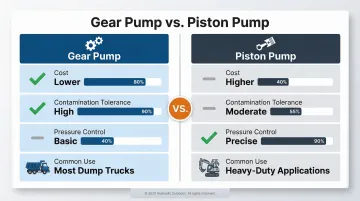
Some heavy-duty applications use piston pumps instead, which offer higher efficiency and finer pressure control. Both types degrade over time. Here's how they compare:
| Feature | Gear Pump | Piston Pump |
|---|---|---|
| Cost | Lower | Higher |
| Contamination tolerance | High | Moderate |
| Pressure control | Basic | Precise |
| Common use | Most dump trucks | Heavy-duty applications |
Regardless of type, both degrade with use and require periodic inspection and repair.
Common Problems With Dump Truck Hydraulic Pumps
Most dump truck hydraulic pump failures follow predictable patterns. Knowing the symptom and its root cause is what separates a quick fix from a costly repeat failure.
Hydraulic Fluid Leaks
Symptoms:
- Visible oil pooling under the truck or around pump fittings
- Rapid drop in reservoir level
- Reduced lift pressure
Likely causes:
- Aged or damaged shaft seals and O-rings
- Loose or corroded fittings
- Micro-cracks in the pump housing from pressure spikes
Insufficient Lift Power or Slow Bed Raise
Symptoms:
- Bed raises very slowly under load or stalls partway up
- Dump cycle noticeably slower than normal
Likely causes:
- Worn internal pump gears causing internal bypass leakage
- Low or degraded hydraulic fluid reducing pressure output
- Relief valve set too low
- Clogged suction filter starving the pump
Abnormal Noise (Cavitation or Knocking)
Symptoms:
- High-pitched whining or squealing at startup
- Intermittent knocking or gurgling under load
- Noise increases with pump temperature
Likely causes:
- Cavitation from inlet vacuum exceeding 5 in.Hg — vapor bubbles implode at the high-pressure side, generating localized temperatures up to 5,000°F and producing the distinctive "marbles in a can" sound
- Air ingestion from low fluid levels or loose inlet fittings
- Worn internal components causing metal-on-metal contact
Overheating
Symptoms:
- Pump body and hydraulic lines noticeably hot to touch
- Oil discolors, smells burnt, or shows reduced viscosity
- Pressure fluctuations under extended operation
Likely causes:
- Prolonged overload operation
- Poor fluid circulation due to blocked cooler or contaminated oil
- Internal bypass from worn components converting energy to heat rather than pressure
Hydraulic Oil Contamination
Symptoms:
- Fluid appears dark, milky, or cloudy
- Visible particles in the oil
- Accelerated wear even after recent service
Likely causes:
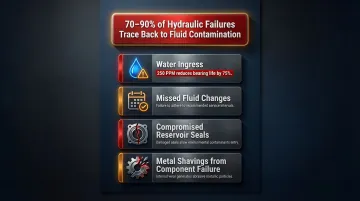
- Water ingress — as little as 250 ppm (0.025%) can reduce bearing life by 75%; 70–90% of hydraulic failures trace back to fluid contamination
- Missed fluid change intervals allowing oxidation and particle buildup
- Compromised reservoir seals admitting dust or moisture
- Previous component failure introducing metal shavings into the circuit
How to Fix a Dump Truck Hydraulic Pump (Step-by-Step)
Attempting a repair without first confirming the root cause is the most common reason hydraulic repairs fail. Always diagnose before disassembling.
Step 1: Identify the Exact Problem
Document visible symptoms:
- Note where fluid is leaking
- Describe pump sound at startup versus under load
- Compare current lift speed to normal operation
- Determine if the issue is consistent or intermittent
Check fluid condition:
- Inspect reservoir level and oil appearance
- Examine inlet hose, suction strainer, and external fittings for restriction, air ingestion, or leakage before assuming internal pump damage
Step 2: Isolate the Root Cause
Determine whether the problem is mechanical (worn gears/seals/pistons), fluid-related (contamination, low level, wrong viscosity), or electrical/control-related (PTO not fully engaging, solenoid valve fault).
Pressure test the pump:
- Install a pressure gauge at the pump outlet to confirm rated pressure
- If pressure is significantly below specification, internal wear is confirmed
- If pressure is normal but lift is slow, the problem likely lies downstream (cylinder seals, valve)
Rule out external factors:
A clogged suction strainer or kinked inlet hose can completely mimic pump failure. Clean or replace the strainer before disassembly.
Step 3: Perform the Repair Based on Root Cause
If the Pump Has a Mechanical Issue (Worn Seals or Internal Components)
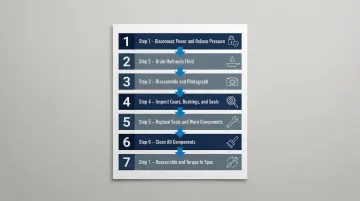
- Disconnect power, engage PTO lockout, and relieve all system pressure
- Drain hydraulic fluid into a clean container
- Disassemble the pump carefully, photographing component order and orientation
- Inspect gears, bushings, side plates, and shaft seals for wear patterns
- Replace damaged seals, O-rings, and worn components using a manufacturer-matched rebuild kit—do not mix seal materials or use incompatible substitutes
- Clean all components with appropriate solvent
- Reassemble in correct order and torque bolts to specification
Match seal material to your hydraulic fluid:
| Seal Material | Temperature Limit | Compatible With | Avoid |
|---|---|---|---|
| NBR (Buna-N) | 248°F | Mineral oils, water-glycol | Brake fluids, ketones |
| FKM (Viton) | 392°F | Mineral oils, synthetic fluids | Glycol brake fluids |
| EPDM | 302°F | Phosphate esters, glycol fluids | Mineral oils, greases |
If the Problem Is Fluid-Related (Contamination, Cavitation, Low Level)
- Flush the hydraulic system completely if you confirm contamination
- Replace with the fluid type and viscosity specified by the truck manufacturer (operating viscosity should be 75–200 SUS at 100°F)
- Clean or replace the suction strainer and return-line filter
- Inspect the reservoir breather cap and replace if clogged
- Bleed air by running the pump at low load through several raise/lower cycles until all air bubbles are purged
If the Problem Is Electrical or PTO-Related
- Check PTO engagement—confirm the PTO is fully engaging and the pump shaft is spinning at correct RPM under load
- On electric-over-hydraulic systems, test the solenoid valve for continuity and check wiring connections
- A faulty solenoid or corroded connector can restrict flow regardless of pump condition
Step 4: Test and Validate the Repair
- Refill the reservoir to the correct level
- Run the pump through several full raise-and-lower cycles under no load first, then under representative load
- Monitor for leaks at all repaired fittings and seals
- Listen for any return of abnormal noise
- Verify that lift speed and pressure have returned to normal specification
- Check fluid temperature after 15–20 minutes of operation
When Should You Fix vs. Replace Your Dump Truck Hydraulic Pump?
The fix-or-replace decision comes down to three factors: repair cost relative to a new or rebuilt pump, the age and total hours on the pump, and the risk of continued failure under load.
Scenario 1: Minor Seal Failure or Suction Leak (Low Mileage Pump)
Fix: Replace shaft seals, O-rings, or inlet fittings—this is a straightforward repair with low parts cost and restores full performance.
Replace: Only necessary if disassembly reveals unexpected internal wear beyond the seals.
Scenario 2: Internal Gear or Piston Wear (High-Hour Pump)
Fix: A full rebuild using an OEM-matched kit makes sense if the housing is intact and the pump has been reasonably maintained. Sourcing parts is the common bottleneck here—especially for older or less common models. Hydrostatic Pump Repair maintains references across thousands of manufacturers, which is often the deciding factor for operators who can't find components elsewhere.
Replace: If wear is severe across multiple internal surfaces and the cost of rebuild parts approaches or exceeds a remanufactured unit, replacement is more economical.
Critical tolerances:
Gear pumps wear directly into their housings. If housing cutout exceeds 0.003" to 0.005" or bearing bores are out-of-round by more than 0.003", the pump is beyond economic repair and must be replaced.
Scenario 3: Contamination-Induced Wear (Fluid Neglect)
Fix: If caught before catastrophic failure, a full flush, component cleaning, seal replacement, and fluid system service can restore function.
Replace: If abrasive contamination has scored gear surfaces, worn bearing bores, or eroded housing walls, internal clearances will be too far out of specification to repair reliably.
Scenario 4: Cracked Housing or Catastrophic Failure Under Load
Replacement is the only safe option. A structurally compromised housing cannot be reliably repaired. Before installing a new unit, inspect the PTO, driveline, and cylinders for collateral damage.
Common Mistakes to Avoid and Preventive Measures
Three mistakes account for the majority of repeat hydraulic pump failures on dump trucks:
- Treating symptoms without confirming root cause — Replacing a pump because of slow lift speed, without first checking the suction strainer, fluid level, or relief valve, wastes money and sets up the same failure on a new pump.
- Using incompatible seals or fluid — Match seal material to your fluid type and use the oil viscosity your truck manufacturer specifies. Wrong viscosity accelerates wear and triggers cavitation.
- Skipping the system flush after a contamination event — Installing a rebuilt pump into a contaminated circuit will destroy it within hours. Flush the full system, replace all filters, and refill with clean fluid before startup.
Avoiding those mistakes gets you through the repair. Staying ahead of the next failure requires a consistent maintenance routine:
- Establish a regular inspection schedule: check fluid level and condition, inspect inlet hose and strainer, listen for early noise changes
- Change hydraulic fluid and filters at manufacturer-specified intervals (every 500–1,000 hours for commercial fleets)
- Never operate with the bed at full extension for extended periods, as this maintains maximum pump pressure and accelerates wear
- Train operators to report early symptoms (slow lift, unusual noise) before they escalate to full failure
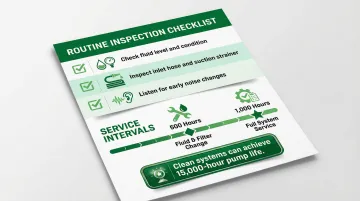
Follow these steps consistently and the lifespan difference is significant. Under light-duty conditions, hydraulic gear pumps typically last 5,000 to 10,000 hours. In clean systems that maintain strict ISO cleanliness codes, service life can reach 15,000 hours.
Conclusion
Most dump truck hydraulic pump failures—leaks, slow lifts, cavitation noise, overheating—are diagnosable and repairable if addressed before they progress to catastrophic internal damage. Correct diagnosis is the critical first step: confirming whether the problem is mechanical, fluid-related, or control-related determines whether a $50 seal kit or a full pump replacement is the right answer, and getting that wrong is what drives unnecessary repair costs.
When parts are hard to source or the failure is complex, a specialist like Hydrostatic Pump Repair can get trucks back in service faster and with fewer callbacks. They handle hydraulic pump repair and rebuilds for Parker, Muncie, and other major manufacturers, with workmanship built to OEM specifications. For operators facing downtime, that combination of fast turnaround and rebuild quality is often the difference between a one-day fix and a recurring problem.
Frequently Asked Questions
Can a dump truck hydraulic pump be repaired?
Yes, most dump truck hydraulic pumps can be repaired. Seal replacements, gear rebuilds, and full internal rebuilds are all viable depending on the extent of wear. Catching the problem early significantly improves repair outcomes and lowers cost—seal kit repairs average $640, while full pump replacement costs $2,400+.
What are common problems with dump truck hydraulic pumps?
The five most common issues are:
- Fluid leaks — seal or fitting failure
- Insufficient lift pressure — internal wear or low fluid level
- Abnormal noise — cavitation or air ingestion
- Overheating — overload or contaminated fluid
- Hydraulic oil contamination — infrequent fluid changes or reservoir seal failure
Between 70% and 90% of all hydraulic failures trace back to fluid contamination.
How much does it cost to repair a dump truck hydraulic pump?
Repair costs vary widely by pump type, truck make, and labor rates. Hose and seal replacement averages $640, pump rebuild or replacement costs around $2,400, and full system overhaul due to catastrophic contamination can exceed $5,800. Early repair is almost always cheaper than full replacement.
Why won't my dump truck bed go down?
If the bed raises but won't lower, the pump is rarely the cause. Dump trucks use single-acting cylinders — the pump raises the bed; gravity handles retraction. Failure to lower typically points to one of these:
- A stuck or faulty solenoid valve not opening the return circuit
- A broken or disconnected linkage on the directional control valve
- A check valve stuck in the closed position
What is a hydraulic repair service for dump trucks?
A hydraulic repair service for dump trucks includes diagnosis, disassembly, seal and component replacement or full rebuild of the pump, cylinder, valves, and related system components. Professional services also flush and recondition the full hydraulic circuit — not just individual parts. This step is critical to preventing repeat failures from residual contamination.