Introduction
A failed Cat final drive doesn't just stop your machine — it stops your entire job site. These drivetrain components transfer power to tracks or tires while delivering torque multiplication, and they endure some of the highest loads in the entire machine system. Excavators, track-type tractors, and wheel loaders all depend on them to keep moving.
Because final drives are enclosed and out of sight, they're easily overlooked during routine maintenance — and that oversight is expensive. Skipping service leads to:
- Accelerated internal wear from contaminated or depleted oil
- Unplanned downtime costing $500 to over $1,000 per hour
- After-failure repairs that cost significantly more than preventive service
- Reduced machine resale value
This guide covers why Cat final drive maintenance matters, the types of maintenance available, warning signs of a failing final drive, a practical maintenance schedule, and answers to common questions.
Key Takeaways
- Cat final drives endure extreme torque and high-impact loads—routine maintenance is essential
- Oil quality is the single biggest factor in longevity; use Cat FDAO or specified TO-4 equivalent
- Key warning signs include unusual noises, overheating, oil leaks, vibration, and brake slippage
- Repairing before failure costs half as much as replacing after breakdown
- Structured maintenance schedules cut long-term repair and downtime costs
Why Maintaining Your Cat Final Drive Matters
Cat final drives are engineered to withstand the highest torque loads in the entire drivetrain—but that engineering only delivers long-term value when paired with consistent maintenance. A proactive maintenance program directly protects machine productivity and uptime.
Performance and Efficiency
Poorly maintained final drives lose the ability to transfer power cleanly, leading to sluggish machine response, inconsistent output, and higher fuel consumption. The Association of Equipment Manufacturers notes that 10-30% of fuel consumed is often wasted on nonproductive idling — a failing final drive only makes that worse.
Component Lifespan
With proper oil management and contamination control, gears and shafts can last through multiple rebuilds. Neglect accelerates surface fatigue, bearing failure, and seal wear, cutting the final drive's usable life well short of its potential.
Cost of Waiting
Repairing a final drive before failure costs half or less than after-failure repairs. The numbers bear that out:
| Scenario | D6R Transmission Repair Cost |
|---|---|
| Before failure (rebearing/reseal) | ~$14,289 |
| After failure | ~$29,307 |
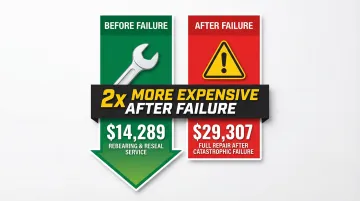
Catastrophic failures on large equipment push costs even higher — between $25,000 and $65,000 — and typically take 1 to 2 weeks of downtime to resolve. When components do need replacement, rebuilt and remanufactured options can deliver same-as-new performance at a fraction of the cost of new parts.
Types of Cat Final Drive Maintenance
Not all maintenance looks the same—the right approach depends on machine hours, operating environment, and component condition. The four maintenance types below provide a complete framework.
Preventive Maintenance
Preventive maintenance for Cat final drives centers on scheduled oil changes using Cat FDAO or specified TO-4 oil, filter changes at minimum every 500 hours, and contamination control. Use a filtered transfer cart when filling and inspect used filters before replacement to catch debris early.
Typical tasks include:
- Checking oil levels during daily walkarounds
- Conducting S·O·S Oil Analysis at scheduled intervals to detect wear metals and contaminants before they cause failure
- Performing daily inspections to catch leaks, unusual noises, or overheating before they escalate
Corrective / Reactive Maintenance
Corrective maintenance is triggered by problem indicators found during inspections: brake slippage, unusual noises, overheating, vibration, visible leaks, or debris found on the magnetic plug.
Risks and costs: Reactive-only programs mean damage is already done before the repair begins. After-failure repairs typically involve damage to related components (not just the primary failure point), require longer downtime, and cost significantly more than before-failure interventions. A fleet of 50 machines experiencing a 30% unplanned downtime rate can lose approximately $2 million annually.
Predictive / Condition-Based Maintenance
S·O·S Oil Analysis works as the primary predictive tool for Cat final drives. Sampling at scheduled intervals measures wear rate, oil condition, oil contamination, and oil identification—providing early warning of abnormal wear before failure occurs.
What S·O·S detects:
- Component wear rate — Elemental analysis detects wear metals (Iron, Chrome, Copper, Aluminum, Lead, Tin) up to 10 microns in size
- Oil contamination — Identifies harmful ingress such as silicon (dirt), soot, water, and coolant
- Particle count — Detects both metallic and non-metallic particles as small as two microns
- Oil condition — Evaluates viscosity, oxidation, sulfation, and nitration to determine if oil has degraded
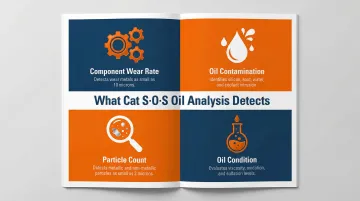
Cross-referencing S·O·S results with service meter hours and machine history lets operators and dealers spot deterioration trends early—so downtime gets scheduled on their terms, not the machine's.
Major / Overhaul Maintenance
A major overhaul is required in two situations: after-failure events (large metal pieces on the magnetic plug, broken components found during inspection) and planned before-failure rebuilds when S·O·S results show elevated wear or target hours are approaching.
What a full overhaul involves:
- Complete disassembly and parts cleaning
- Pass/fail inspection of every component
- Automatic replacement of Level I parts (bearings, seals, Duo-Cone seals)
- Evaluation of Level II parts (gears, plates, shafts) for reusability
- Reassembly to factory tolerances
When final drive hydraulic motors require rebuild or remanufacture as part of an overhaul, Hydrostatic Pump Repair specializes in hydraulic motor repair and rebuild services for construction equipment—reaching their team at 800-361-0028 is a practical starting point.
Warning Signs Your Cat Final Drive Needs Attention
Cat final drives are enclosed systems, so operators must rely on indirect cues to identify maintenance needs early. The indicators below are the most critical to monitor.
Performance or Output Changes
Reduced machine travel speed, sluggish response to direction changes, or difficulty completing normal tasks under load are early signs of internal wear—particularly in gears and bearings. Don't chalk these up to normal aging — inspect the drive.
Unusual Noises or Vibration
Specific sounds to listen for:
- Grinding or whining points to worn gears or bearings, low fluid, or contaminated oil
- Clunking during operation typically means gear damage or excessive backlash
- Persistent vibration suggests gear, bearing, or sprocket failure
Overheating
Overheating in the final drive compartment is typically caused by wrong oil type, low fluid level, or worn/damaged seals restricting proper heat dissipation. Overheating accelerates toric ring compression set in Duo-Cone seals, leading to oil leaks and further contamination.
Visible Leaks and Debris
Oil leaks indicate worn, hardened, or cracked seals or bearing failure. Debris on the magnetic plug is a critical indicator—particularly large pieces.
Magnetic plug debris interpretation:
| Wear Rating | Debris Description | Required Action |
|---|---|---|
| Rating 1 | Fine, paste-like deposit | Normal wear; no action needed |
| Rating 2 | Large paste-like deposit with tiny metal pieces | Monitor closely |
| Rating 3 | Coarse metal deposits visible | Moderate wear; increase inspection frequency |
| Rating 4 | Metal deposits between 1mm and 6mm | Advanced bearing breakdown; cut open oil filter |
| Rating 5 | Metal bits larger than 6mm (1/4 inch) | Take equipment out of service immediately |
Recurring Issues and Brake Problems
Brake slippage signals trouble in the final drive's brake group. Common causes include worn friction plates, wrong oil type, incorrect pressure settings, or low fluid level. If the same issue returns shortly after a fix—or unplanned downtime is becoming routine—a deeper repair is overdue, not optional.
Cat Final Drive Maintenance Schedule
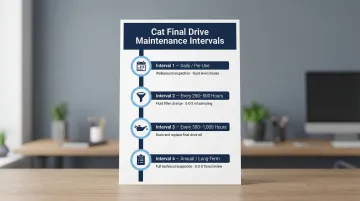
Maintenance intervals vary based on operating environment, application type (high-impact vs. standard loads), and whether the machine runs continuously or intermittently. The table below covers standard service intervals as a baseline — always cross-reference with your machine's specific Operations and Maintenance Manual.
Maintenance Frequency Table
| Interval | Tasks |
|---|---|
| Daily / Per-Use | Walkaround inspection for leaks, unusual noise, overheating, or brake performance issues; check fluid levels visually |
| Every 250–500 Hours | Change fluid filters (interval varies by filter type, application, and environment); conduct S·O·S oil sampling; inspect magnetic plug for metal debris |
| Every 500–1,000 Hours | Drain and replace final drive oil using Cat FDAO or specified equivalent; drain oil when warm and agitated to maximize contaminant removal |
| Annual / Long-Term | Full technical inspection and service meter hour review with dealer; evaluate S·O·S trend data; plan before-failure repair interventions (reseal, rebearing) based on component life estimates |
Adjustments for Harsh Environments
Machines in demanding conditions need tighter intervals. Key adjustments include:
- Abrasive or muddy environments: Increase S·O·S sampling from every 500 hours to every 250 hours
- Cold weather with continuous operation: Run the final drives at partial throttle for several minutes to warm the oil before beginning production work
Low-Usage and Calendar-Based Intervals
For low-usage machines, service intervals follow whichever threshold comes first: mileage, fuel consumption, service hours, or calendar time. If a machine doesn't reach 2,000 hours within 12 months, the final drive oil still needs changing at the 1-year mark. Condensation buildup and seasonal temperature swings degrade oil quality regardless of how few hours the machine has logged.
Conclusion
Treating Cat final drive maintenance as a planned expense—rather than a reactive one—is what separates operators who control costs from those who absorb them. Proper oil management, scheduled oil analysis, regular inspections, and planned before-failure repairs work together as the most cost-effective strategy for protecting uptime and long-term machine value.
A structured maintenance plan aligned with Cat's service recommendations and backed by accurate records lets operators schedule downtime on their own terms—and maximize component reusability across multiple rebuilds.
Frequently Asked Questions
Can a Cat final drive be repaired or rebuilt?
Yes, Cat final drives are designed to be rebuilt or remanufactured for a second life. Repair options range from resealing and rebearing to full overhaul, while Cat Reman components deliver performance equivalent to new parts at 45% to 85% of new prices with a 12-month warranty.
How long should a Cat final drive last?
Gears and shafts can last through multiple rebuilds with proper oil management, regular S·O·S oil analysis, and timely before-failure repairs. Actual service life depends on application and model — preventive maintenance routinely pushes components well past their original design-hour ratings.
How can you tell if a Cat final drive is failing?
Key warning signs include unusual grinding or whining noises, vibration during operation, overheating in the final drive compartment, visible oil leaks, brake slippage, and metal debris found on the magnetic plug during inspection. Any of these symptoms warrant immediate technical evaluation.
What are the common causes of Cat final drive failure?
Primary causes include contaminated or incorrect lubricating oil, improper installation or assembly (wrong preloads/tolerances), machine overloading or excessive fatigue hours, and failure to replace worn seals and bearings before they damage other components. Contamination from dirt or water entry accelerates wear at a rapid rate.
What oil should be used in a Cat final drive?
Cat Final Drive and Axle Oil (FDAO) is the preferred lubricant for most Cat final drive applications, offering extended drain intervals and better wear protection than TO-4 oils. However, FDAO must NOT be used in compartments containing friction materials like brakes or clutches — use Cat TDTO (TO-4) in those applications.
How often should Cat final drive oil be changed?
Standard intervals on most Cat machines run 2,000 hours or 1 year, though conditions and model affect this. Switching to Cat FDAO extends that to 3,000–4,000 hours, and FDAO SYN paired with S·O·S analysis can push intervals to 6,000 hours.