Introduction
A hydraulic failure on a Cat excavator doesn't just slow you down — it stops work entirely. These failures rank among the most disruptive issues on any job site, sidelining equipment for days and pushing repair bills into five figures.
As Cat excavators age or take on heavier workloads, hydraulic problems become more frequent — but most follow recognizable patterns. This guide covers the most common hydraulic issues, their root causes, a step-by-step troubleshooting process, and preventive practices to keep your machine running reliably.
Key Takeaways
- Most common problems: Low or contaminated fluid, hydraulic pump failure, cylinder seal leaks, and overheating
- Catch issues early — most failures are fixable before they cascade into system failure
- Troubleshoot systematically: identify symptoms, confirm root cause, apply the fix, verify results
- Call a hydraulic specialist for internal pump damage, full system failure, or repeated unexplained issues
What Is the Cat Excavator Hydraulic System?
Cat excavators use a load-sensing, pressure-compensating (LSPC) hydraulic system. The engine drives a main hydraulic pump that pressurizes fluid, which flows through a main control valve to power cylinders (boom, arm, bucket), swing motors, and travel motors.
In Caterpillar's Proportional Priority Pressure Compensated (PPPC) design, oil flows proportionally to joystick movement. The circuit with the highest working pressure provides the load signal to control pump flow during multiple implement functions, ensuring the higher-priority circuit receives adequate flow via compensator pistons (which regulate flow balance) and check valves.
How the System Works
When the joysticks are in neutral, oil bypasses through the center of the main control valve and returns to the tank. During operation, electronic actuation matches pump discharge flow to your desired speed, routing maximum hydraulic energy to the actuator.
This design delivers precise, efficient control — but it also introduces multiple failure points across the pump, valves, cylinders, lines, and fluid. The system degrades over time through heat cycles, contamination, wear, and maintenance gaps, and issues in one component often cascade into others.
Operating Pressures by Model:
| Model | Main System Pressure | Lift Mode Pressure | Swing Pressure |
|---|---|---|---|
| Cat 320 | 5,075 psi | 5,510 psi | 3,988 psi |
| Cat 336 | 5,076 psi | 5,511 psi | 4,264 psi |
| Cat 390D L | 5,076 psi | 5,076 psi | 3,771 psi |
At these pressures, a pinhole leak in a hydraulic line can inject fluid through skin — depressurize the system fully before any inspection or repair work.
Common Hydraulic Problems on a Cat Excavator
Most Cat excavator hydraulic failures follow predictable patterns. Knowing what to look for cuts diagnostic time and prevents misdiagnosis.
Problem 1: Hydraulic Fluid Contamination or Low Fluid Level
Symptoms:
- Sluggish or jerky operation
- Whining noise from the pump
- Overheating
- Visible milky or dark discolored fluid in the reservoir
Between 70% and 90% of hydraulic system failures are contamination-related, with only 10% to 30% traced to age, defects, or misuse. Common causes include:
- Worn or damaged seals letting dirt, water, or metal particles into the circuit
- Slow leaks or missed top-ups dropping fluid below minimum level
- Clogged filters restricting flow and starving the pump
Problem 2: Hydraulic Pump Failure or Degraded Output
Symptoms:
- Significant loss of digging force and lift capacity across all functions
- Loud banging or knocking from the pump
- Rising fluid temperature
- Slow cycle times even at full throttle
Root causes typically fall into one of three categories:
- Internal wear on piston shoes, cylinder block, or valve plate, reducing volumetric efficiency
- Cavitation from low fluid levels or a clogged suction strainer, causing vapor bubbles that erode pump surfaces
- Contaminated fluid driving abrasive wear on precision internal components
Problem 3: Hydraulic Cylinder Not Retracting or Extending
Symptoms:
- Cylinder moves slowly
- Drifts under load
- Fails to extend or retract fully
- Visible oil weeping around the rod seal
Likely causes include:
- Worn or damaged piston seals causing internal bypass
- A scored cylinder bore preventing proper sealing
- Rod seal failure allowing external leakage
- Insufficient system pressure reaching the cylinder, which points to a faulty relief valve or directional control valve
Problem 4: Hydraulic System Overheating
Symptoms:
- Fluid temperature warning on the monitor display
- Reduced performance during extended cycles
- Burnt smell from hydraulic oil
- Foamy fluid in the reservoir
Overheating usually traces back to:
- Dirty or blocked oil cooler fins restricting heat dissipation
- Low fluid level reducing the system's thermal capacity
- Excessive internal leakage (pump bypass or relief valve stuck open) generating heat under load
- Sustained operation beyond the system's rated capacity
Why Cat Excavator Hydraulic Systems Fail
Cat excavator hydraulic systems fail through predictable, compounding causes — understanding them makes the difference between a quick fix and a preventable rebuild.
Operational Stress
High-pressure digging cycles, repetitive swing and lift operations, and running at full throttle for extended periods generate heat and wear that degrade pump components, seals, and fluid over time. Cat excavators operate at pressures exceeding 5,000 psi—extreme forces that punish every component in the circuit.
Contamination Pathways
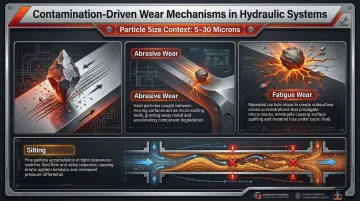
Typical metal-to-metal clearances in Cat hydraulic systems are 5 to 30 microns. Particles of this size cause severe surface degradation through:
- Hard particles bridging moving surfaces — scraping metal and generating secondary wear debris (abrasive wear)
- Surface stress risers from particle impacts that expand into spalling under repeated high-pressure loads (fatigue wear)
- Slow particulate buildup on metal surfaces that clogs flow paths and jams valves (silting)
Contamination enters through cylinder rod seals abraded by jobsite conditions, breathers that allow moisture ingress, and improper fluid change practices — each introducing particulates or water that act as abrasives throughout the entire circuit.
Maintenance Gaps
Contamination damage compounds fast when maintenance falls behind. Skipped fluid and filter intervals, ignored early warning signs, and incorrect fluid viscosity all remove the safeguards that slow that progression.
Consequences of Ignoring Warning Signs:
- Reduced digging efficiency and slow cycle times signal productivity loss
- Continued operation with contaminated or low fluid accelerates pump and valve wear into a full-system failure
- Hydraulic leaks under pressure create serious safety hazards—high-pressure fluid injection injuries require surgical debridement within 6 hours to reduce amputation risks
How to Troubleshoot and Fix Cat Excavator Hydraulic Issues
Attempting repairs without correctly identifying the problem wastes time and money. Follow this structured process to isolate the root cause before touching any components.
Step 1: Identify the Exact Problem
Conduct a full walk-around:
- Check hydraulic fluid level and condition in the reservoir
- Inspect all hoses, cylinders, and fittings for visible leaks or damage
- Look for oil accumulation on the undercarriage or boom
Operate all hydraulic functions:
- Test boom, arm, bucket, swing, and travel
- Document which specific functions are affected
- Note whether the issue is present at startup or only under load
- Determine whether performance degrades progressively or fails suddenly
Step 2: Confirm the Root Cause Category
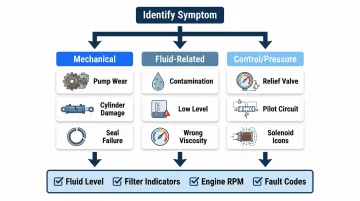
Start by categorizing the fault into one of three areas: mechanical (pump wear, cylinder damage, seal failure), fluid-related (contamination, low level, wrong viscosity), or control/pressure (relief valve setting, pilot circuit fault, solenoid valve failure). Narrowing the category first prevents unnecessary disassembly.
Rule out external causes first:
- Verify fluid level
- Check filter restriction indicators
- Confirm the engine is reaching the correct RPM at full throttle
- Check for any active fault codes on the Cat monitor display before opening any hydraulic components
Step 3: Apply the Appropriate Fix
If the Issue Is Fluid or Contamination-Related
- Drain and replace the hydraulic fluid with Cat-specified fluid grade and viscosity
- Replace all return, case drain, and pilot filters simultaneously
- Flush the reservoir and inspect for metal particles or sludge that signal internal component wear
Critical: If water contamination is confirmed (milky fluid), identify the ingress point—breather cap, cylinder seals, cooler leak—before refilling. Replenishing fluid without sealing the source will repeat the problem within days.
If the Issue Is Mechanical (Pump, Cylinder, Seals)
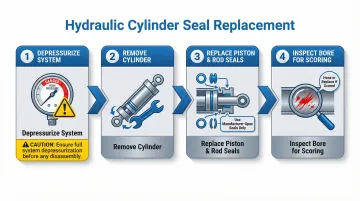
For cylinder seal failure:
- Depressurize the system completely
- Remove the cylinder
- Replace piston seals and rod seals with manufacturer-spec components
- Inspect the bore for scoring—a scored bore requires honing or cylinder replacement before new seals will hold
For hydraulic pump degradation:
Conduct a pump flow test using a hydraulic flow meter to confirm whether volumetric efficiency has dropped below acceptable thresholds. Variable displacement pumps must be tested at 100% displacement and maximum RPM—testing at reduced displacement yields falsely low efficiency readings.
If confirmed, internal rebuild or pump replacement is required. For Cat excavator main pumps, a specialized rebuild shop typically reduces lead time and cost compared to OEM-only channels — Hydrostatic Pump Repair (800-361-0028) handles Cat pump rebuilds and can advise on parts availability before you commit to a repair path.
If the Issue Is a Pressure or Control Problem
Check the main relief valve:
- Use a calibrated pressure gauge against Cat service spec for your specific model
- A relief valve stuck open or set too low causes weak performance across all functions without any visible mechanical damage
For pilot circuit issues:
Controls feel sluggish or unresponsive? Check pilot filter condition, pilot relief pressure, and solenoid valve function. Pilot system faults are often misdiagnosed as main pump failure because the symptoms overlap closely.
Step 4: Test and Validate the Fix
After repair:
- Run the machine through all hydraulic functions under no-load conditions first, then under normal working load
- Monitor fluid temperature
- Listen for abnormal pump noise
- Verify that cycle times and lifting force have returned to expected performance
Watch for recurrence over the next 8-10 operating hours. If symptoms return, the root cause was not fully resolved—check for a second failure point that was masked by the primary issue.
When to Fix vs. Replace Cat Hydraulic Components
The fix-versus-replace decision comes down to the severity of internal damage, the cost of repair versus replacement, and the risk of repeat failure in a critical component.
Scenario 1: Cylinder with Seal Failure and No Bore Damage
Decision: Fix
Replace seals and inspect rod surface. If the bore is smooth and the rod is not pitted or bent, a full reseal is a cost-effective repair that restores like-new cylinder performance.
Scenario 2: Hydraulic Pump with Confirmed Low Volumetric Efficiency but No Metal Contamination
Decision: Fix
A hydraulic pump rebuild—replacing pistons, valve plate, and shaft seal—is typically 50-65% less expensive than a new Cat OEM pump and can restore full output if the pump housing is not cracked or scored. Cat Reman pumps cost 65-85% of new with core return and include a same-as-new 12-month warranty.
Scenario 3: Pump Failure with Widespread Metal Contamination Throughout the System
Decision: Replace the Pump AND Flush the Entire Circuit
Partial repair is not viable here. A catastrophic pump failure fills the hydraulic oil with steel and brass shavings that migrate through the entire circuit:
- Score control valve spools and jam relief valves
- Migrate to cylinders, shredding piston and rod seals
- Destroy a new pump within hours if not removed first
Skipping the full system flush after pump replacement is the most common and costly mistake in this failure mode. Budget for pump replacement, a full system flush, and all filter replacements.
Scenario 4: Hydraulic System with Multiple Simultaneous Failures
Decision: Assess Before Committing to Repair
If the machine is approaching or past its service life, the cost of a comprehensive hydraulic overhaul may approach the value of the machine. If repair costs exceed 50-60% of the machine's current market value, a Cat Certified Rebuild or outright replacement is typically the better financial call.
Preventive Maintenance to Avoid Future Cat Excavator Hydraulic Problems
Proactive maintenance is far cheaper than emergency hydraulic repairs. Most Cat excavator hydraulic failures are preventable with consistent inspection and service discipline.
Establish a Hydraulic Maintenance Schedule
Cat OMM intervals set the baseline for service timing:
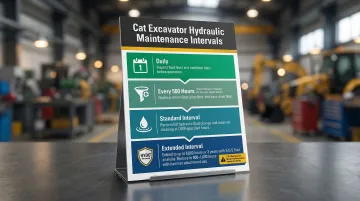
- Check fluid level and condition daily before operation
- Replace hydraulic return filter, pilot filter, and case drain filter every 500 hours
- Conduct a full fluid change and reservoir cleaning at manufacturer-specified intervals
Using Cat HYDO Advanced hydraulic fluid with 500-hour S·O·S fluid analysis extends standard 2,000-hour drain intervals up to 6,000 hours or 3 years. Continuous hydraulic hammer use cuts that interval to 600–1,000 hours.
Protect the System from Contamination and Thermal Stress
Keep these habits consistent to prevent contamination and heat damage:
- Keep cylinder rods clean and inspect rod seals weekly for early weeping
- Clean hydraulic oil cooler fins regularly to maintain cooling capacity
- Avoid continuous operation under overload conditions that push fluid temperature past the safe threshold
- Use only Cat-specified hydraulic fluid—mixing types or using incorrect viscosity compromises lubrication and seal compatibility
Caterpillar recommends a cleanliness target of ISO 18/15 or cleaner for optimizing component life. Install high-efficiency filters after any system invasion or repair, and change them again 250 hours later.
Train Operators and Document Issues
Brief operators on early warning signs so problems get reported immediately rather than worked around:
- Sluggish or slow hydraulic response
- Unusual noise from pumps or cylinders
- Fluid temperature warning alerts on the dash
Maintain a service log tracking fluid analysis results, filter condition at each change, and any hydraulic repairs. Patterns in those records often expose root causes before a major failure develops—and catching problems early matters. Skipping routine maintenance leads to emergency repair premiums that run 300% to 500% more than planned service costs.
Frequently Asked Questions
What are the most common hydraulic system problems on a Cat excavator?
The top four issues are hydraulic fluid contamination or low levels, hydraulic pump wear and reduced output, cylinder seal failure, and system overheating. These problems are interrelated, so identifying one early typically stops the others from taking hold.
Why won't the hydraulic cylinder on my Cat excavator retract or extend?
The three most likely causes are:
- Worn piston or rod seals causing internal bypass
- A faulty directional control valve not routing pressure to the cylinder
- A low main relief valve setting reducing available pressure
A drift test helps distinguish a cylinder seal issue from a valve issue.
How do I know if my Cat excavator's hydraulic pump is failing?
Watch for these warning signs:
- Loss of force and slow cycle times across all functions
- Loud banging or knocking from the pump at startup or under load
- Rising hydraulic fluid temperature
- Metal particles in the fluid during a filter change
What causes a Cat excavator hydraulic system to overheat?
Common causes include:
- A blocked or dirty oil cooler restricting heat dissipation
- Low fluid levels reducing thermal capacity
- Excessive internal leakage bypassing the circuit and generating heat
- Sustained overloading beyond the system's designed duty cycle
How often should hydraulic fluid be changed on a Cat excavator?
Refer to your specific model's Operation and Maintenance Manual for exact intervals. Cat recommends fluid analysis at scheduled hour intervals to guide change timing. Fluid contamination or overheating events may require an early unscheduled change regardless of hours.