Repair Guide](https://file-host.link/website/hydrostaticpumprepair-fthmsm/assets/refined-images/1777349105120000_d671cfc9b0114b5e928c7de59445f243/360.webp)
Introduction
If your John Deere LT160 is sluggish, jerking under load, or has lost drive entirely, the hydrostatic transmission is almost always the culprit. Among LT160 owners, HST problems are the most-reported mechanical failure — and they're frustrating because the symptoms can look identical whether you're dealing with a $15 belt or a failed internal pump.
Most failures trace back to four root causes: fluid degradation, air ingestion, drive belt wear, or internal component breakdown.
This guide covers how to diagnose each cause, fix it step by step, and determine when a rebuild makes more financial sense than a full replacement.
Key Takeaways
- The LT160 uses a sealed Tuff Torq K46 transaxle — no traditional gears, so standard gear-based fixes don't apply
- Most common problems: loss of drive power, jerky movement, unusual noise, and fluid leaks
- Air purging, fluid checks, and drive belt inspection fix most issues before internal damage sets in
- Internal failures often require professional rebuild or replacement
- Catching problems early — and maintaining fluid levels — dramatically extends transmission life
What Is the John Deere LT160 Hydrostatic Transmission?
The John Deere LT160 (produced 2002-2005) uses a Tuff Torq K46C Integrated Hydrostatic Transaxle (IHT). This self-contained unit combines a hydraulic pump and motor in a single die-cast aluminum housing, transferring engine power to the rear wheels without manual gear shifts. The system allows infinitely variable speed control through a simple foot pedal.
The "Sealed for Life" Contradiction
John Deere's operator manual states the transmission is sealed and requires no maintenance. However, Tuff Torq—the actual manufacturer—explicitly recommends oil changes after the first 50 hours and every 200 hours thereafter for heavy usage. This gap between manufacturer and dealer guidance catches many owners off guard, often after damage is already done.
The K46C is a wear-prone system. Internal seals, charge pumps, and moving components degrade over years of use — especially under strain from hills, heavy loads, or skipped maintenance intervals. Key specs for the K46C include:
- Fluid capacity: ~2.3–2.4 quarts of hydraulic fluid
- Pump displacement: 7 cc/rev
- Motor displacement: 10 cc/rev
- Housing: Die-cast aluminum, fully integrated (pump + motor)
Common Problems With the LT160 Hydrostatic Transmission
Most LT160 HST failures follow recognizable patterns — match your symptom below to narrow down the likely cause.
Problem 1: Loss of Drive or Weak Forward/Reverse Power
Symptoms:
- Tractor moves very slowly or not at all, especially under load or on inclines
- Pedal feels normal but machine barely moves
- Loss of power after 15-30 minutes of operation (heat-related)
Likely causes:
- Air in the hydraulic circuit (most common after storage or fluid work)
- Low fluid level
- Degraded oil losing viscosity when hot
- Worn internal pump components
- Slipping drive belt
Problem 2: Jerky or Inconsistent Movement
Symptoms:
- Movement surges, hesitates, or feels uneven when engaging the drive pedal
- Worse at low speeds or when changing direction
- Unpredictable response to pedal input
Likely causes:
- Air contamination in the system
- Degraded or incorrect hydraulic fluid
- Sticking control linkage
- Worn drive belt
Problem 3: Unusual Noise (Whining, Grinding, or Cavitation)
Symptoms:
- High-pitched whine or grinding sound during operation
- Louder under load
- Cavitation noise (rattling/gurgling) suggests air in fluid
Likely causes:
- Low fluid level
- Air ingestion
- Worn internal gears or bearings
- Failing charge pump
Problem 4: Fluid Leak at the Transaxle
Symptoms:
- Oil spots under the tractor near rear transaxle
- Fluid level drops over time
- Possible burning smell if fluid contacts hot components
Likely causes:
- Degraded axle seals
- Cracked housing
- Loose fittings
Note: The LT160 transaxle is a sealed unit — any external leak typically points to significant internal wear rather than a quick surface fix.
How to Fix the LT160 Hydrostatic Transmission
Guessing at a fix without diagnosing first wastes time and money—especially on a sealed transaxle where disassembly is labor-intensive. Work through each step in order.
Step 1: Inspect the Drive Belt and Control Linkage
Check the drive belt first:
- Locate the belt connecting the engine to the transaxle input pulley (John Deere Part #M144044)
- Inspect for cracking, glazing, stretching, or slippage
- A worn belt perfectly mimics HST failure and is the cheapest fix
- Replace if the belt shows any visible wear or measures longer than 91.89" effective length
Inspect control linkage:
- Check motion control linkage and bypass rod for bends or disconnection
- Confirm the bypass valve (used for freewheeling/towing) is fully closed before testing
- Improper adjustment or a partially open bypass valve causes complete loss of drive
Step 2: Check and Correct the Hydraulic Fluid
Locate and inspect:
- Find the fluid check/fill port on the transaxle (consult LT160 service manual for exact location)
- Check fluid level and condition
- Dark, burnt-smelling, or milky fluid must be replaced immediately
- Milky/tan fluid indicates water contamination—a serious problem requiring full fluid replacement
Use the correct fluid:
| Fluid Type | Manufacturer | Application |
|---|---|---|
| 10W-30 Motor Oil | Factory Fill | Standard factory fill |
| John Deere HY-GARD J20C | John Deere | Upgraded high-viscosity hydraulic oil for better heat resistance |
| Tuff Tech (187Q0899000) | Tuff Torq | Premium synthetic 5W-50 blend specifically formulated for Tuff Torq IHTs |
Critical: Never use Automatic Transmission Fluid (ATF) in K46 units. Using the wrong viscosity fluid causes sluggish response and accelerated internal wear.
Step 3: Purge Air From the Hydrostatic System
Air in the hydraulic circuit is the single most common cause of weak or jerky drive on the LT160, especially after storage, a fluid change, or running the unit low on fluid.
Official Tuff Torq purging procedure:
- Check the oil level and top off if needed
- Safely raise the rear wheels off the ground using jack stands
- Disengage the bypass rod to allow freewheeling
- Start the engine and operate at low idle speed
- Re-engage the bypass valve (close it for normal operation)
- Slowly depress and hold the forward pedal, then open and close the bypass valve a few times
- Repeat for the reverse pedal
- With the bypass valve closed, cycle the drive pedal forward and reverse in a back-and-forth motion
- Repeat until the axles start to move
- Once movement begins, increase engine speed gradually
- Continue cycling forward and reverse until the transaxle gives full response
- Turn off the engine, remove jack stands, lower wheels to the ground
- Recheck and top off oil level
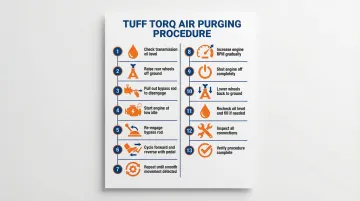
Expect two to three purge cycles. Performance should noticeably improve after each pass.
Step 4: Address Internal Mechanical Failures
If steps 1-3 do not resolve the issue, the problem is likely internal:
- Worn pump pistons
- Damaged motor components
- Failed bearings
- Degraded internal seals
Disassembling a Tuff Torq K46 sealed transaxle is possible but requires mechanical skill, a clean workspace, and correct reassembly torque specs. Mistakes can cause immediate re-failure.
This is where professional hydrostatic transmission repair becomes the practical choice. A specialist like Hydrostatic Pump Repair can diagnose internal failures, source hard-to-find LT160 transaxle components, and rebuild or replace the unit. With expertise in rebuilding hydrostatic pumps and motors to manufacturer specifications, professional repair often costs less than a new OEM transaxle at a fraction of OEM replacement cost.
For complex internal repairs, contact Hydrostatic Pump Repair at 1-800-361-0028 to discuss diagnostic and rebuild options specific to your LT160.
Step 5: Test and Validate the Repair
After any repair:
- Test the tractor on flat ground first, then on a mild incline
- Operate at both low and full speed in forward and reverse
- Monitor for symptom recurrence over the next several uses
- Check for new leaks at the transaxle after the first post-repair operation
- Confirm the drive pedal response is smooth and proportional
Any remaining hesitation or noise indicates the root cause was not fully resolved.
Fix vs Replace: Making the Right Call on the LT160 HST
The fix-vs-replace decision comes down to four factors: repair cost, tractor age, hours of use, and what replacement units actually cost in the current market. The breakdown below gives you real numbers to work with.
Current Market Pricing (2026)
| Component | Part Number | Estimated Price |
|-----------|-------------|-----------------|
| New Tuff Torq K46C Transaxle | 7A646024021 / AM130330 | $715-$800 |
| Tuff Torq Internal Repair Kit | 1A646099581 / 1A646098480 | $412-$420 |
| Professional Labor (typical) | — | $55-$135/hour |
Labor time allowances:
- Transaxle removal and replacement: 1.5 hours
- Internal rebuild: 2.5 hours
Cost comparison example:
- DIY rebuild: $420 parts + your time
- Professional rebuild: $420 parts + $250 labor = $670 total
- Professional replacement: $750 parts + $150 labor = $900 total
Fix When:
- Air, fluid, belt, or linkage issues are the culprit — low cost to fix, high success rate
- Housing is intact with no cracks or significant leaks
- Rest of the tractor is in solid working condition
- Rebuild cost is well below replacement tractor value
Replace When:
- Internal components show severe wear or damage
- Housing is cracked
- Repair costs approach or exceed a quality remanufactured unit
- Multiple systems on the tractor are failing simultaneously—tractor replacement may be smarter
For non-DIY owners paying shop rates, full replacement is more cost-effective than a rebuild — it eliminates the risk of a failed repair and the additional labor bill that comes with it.
Preventive Maintenance to Avoid Future LT160 HST Issues
Consistent maintenance dramatically extends transmission life and lowers total repair costs.
Key preventive actions:
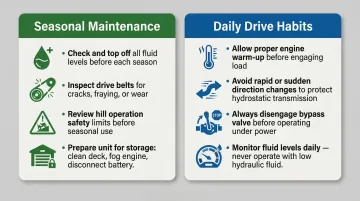
- Check fluid level and condition each season; dark or burnt fluid accelerates internal wear
- Inspect and replace the drive belt annually per John Deere's recommendation
- Avoid prolonged operation on steep hills, which overstresses a worn transaxle
- Before storage, run the engine five minutes to dry belts and pulleys, then store in a dry location to prevent moisture ingestion
How you operate the tractor day-to-day matters just as much as scheduled service. Drive habits to follow:
- Allow the engine to warm up before demanding full drive engagement
- Avoid rapid direction changes under load
- Disengage the bypass correctly before towing to prevent internal pump damage
- Never operate with low fluid levels—cavitation destroys internal components
Follow these habits consistently and the K46 transaxle holds up well. Field reports show units reaching 500, 700, and 1,200+ hours under normal residential use. Premature failures almost always trace back to heavy towing, ground-engaging work, or neglected fluid maintenance.
Conclusion
Most John Deere LT160 hydrostatic transmission problems—from sluggish drive to noise and leaks—have identifiable root causes and can be resolved with systematic diagnosis, the right fluid, and proper purging procedure. Early action on minor symptoms prevents costly internal damage. Once symptoms point to worn internal components—like a failed charge pump or damaged pistons—DIY repairs typically do more harm than good.
For complex internal repairs or when you need expert diagnosis, Hydrostatic Pump Repair specializes in rebuilding hydrostatic transmissions and transaxles to OEM specs. Call 1-800-361-0028 to discuss your LT160 repair options.
Frequently Asked Questions
How long does a John Deere LT160 hydrostatic transmission last?
With proper maintenance, the LT160 HST can last several hundred operating hours or many years of seasonal use. However, heavy use on hills, neglected fluid, or running the system low accelerates wear significantly—some units fail in under 200 hours under harsh conditions.
What are common hydrostatic transmission problems on a John Deere LT160?
The top issues are loss of drive power, jerky or weak movement, whining or cavitation noise, and fluid leaks. Most trace back to air contamination, fluid degradation, belt wear, or internal component failure from prolonged use without fluid maintenance.
Can the John Deere LT160 hydrostatic transmission be serviced or repaired?
Yes. While the unit is sealed from the factory, it can be serviced by experienced DIYers or professional repair shops. Fluid replacement, air purging, and internal rebuilds are all viable service options.
What is the best oil or hydraulic fluid for a John Deere LT160 hydrostatic transmission?
The factory fill is 10W-30 motor oil, but John Deere Low Viscosity HY-GARD J20C or Tuff Torq Tuff Tech synthetic 5W-50 offer better heat resistance and service life—incorrect fluid causes sluggish response and premature wear.
How do you purge air from a John Deere LT160 hydrostatic transmission?
Raise the rear wheels off the ground, engage the bypass valve, then slowly cycle the drive pedal forward and reverse at low RPM several times. Repeat until smooth power returns—typically two to three purge cycles are needed.
How much does it cost to repair or replace a John Deere LT160 hydrostatic transmission?
Belt and fluid fixes cost under $100. Internal rebuild kits run $412–$420, while a new Tuff Torq K46C transaxle costs $715–$800. Professional labor adds $150–$340 depending on the scope of work—comparing rebuild versus replacement costs helps determine the right path for your situation.